Cart
0
What Is Unlacquered Brass? The Living Finish Explained
If you've spent any time browsing kitchen or bathroom fixtures lately, you've probably come across the term "unlacquered brass" — and wondered what it actually means, and why designers can't stop talking about it.
What Is Unlacquered Brass?
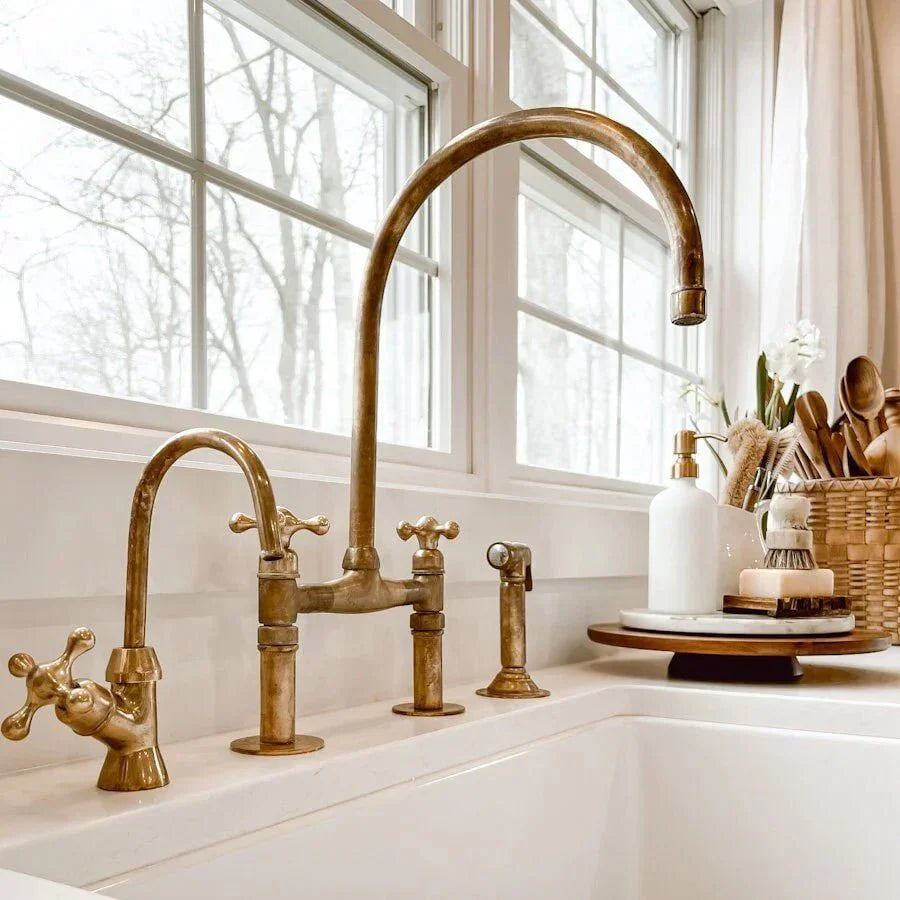
Unlacquered brass is solid brass that leaves the workshop exactly as it is: no clear coat, no protective lacquer, no plating. Most brass hardware on the market is sealed with a thin layer of lacquer to keep it shiny and uniform forever. Unlacquered brass skips that step entirely, leaving the raw metal exposed to air, water, and touch.
That means it's allowed to do what brass naturally does — age.
Will Unlacquered Brass Tarnish?
Yes — and that's the whole point. Within weeks of installation, unlacquered brass begins developing a soft, warm patina as it reacts with moisture and oxygen. Over months and years, it deepens into a rich, antique character that no two pieces ever share exactly, since the process depends on your home's water, humidity, and how often the piece is touched.
This isn't a flaw. It's called a living finish — and it's the reason people choose unlacquered brass over a lacquered alternative in the first place. A faucet in a busy kitchen will darken faster around the handles where hands touch it most, creating a worn, lived-in look that designers often pay extra to fake on other materials.
How to Clean Unlacquered Brass
Caring for unlacquered brass is simpler than most people expect:
- Everyday cleaning: Wipe with a soft, damp cloth. Avoid abrasive sponges or anything that could scratch the surface.
- Avoid harsh chemicals: Skip bleach, ammonia-based cleaners, or anything labeled "brass cleaner" unless you specifically want to strip the patina.
- Water spots: A light buff with a dry microfiber cloth usually takes care of them.
- Let it age: The less you intervene, the more naturally the patina develops. Most owners find the finish becomes more beautiful with time, not less.
Can Unlacquered Brass Be Polished Back to Shiny?
Yes. If you ever want to restore the original golden shine, a basic brass polish and some elbow grease will bring it back — there's no coating in the way. This is one of the biggest advantages over lacquered brass: once a lacquer finish starts to wear or chip, it can look patchy and is difficult to repair evenly. Unlacquered brass can simply be polished back to its original state any time you like, and it will start aging again the moment you stop.
Unlacquered vs. Lacquered vs. Polished Nickel: Which Is Right for You?
| Unlacquered Brass | Lacquered Brass | Polished Nickel | |
|---|---|---|---|
| Finish over time | Develops a living patina | Stays uniform until lacquer wears | Stays bright and uniform |
| Maintenance | Minimal, ages naturally | Avoid scratching the coating | Periodic polishing |
| Character | Unique, evolves with use | Consistent, "new" look | Consistent, cool-toned look |
| Best for | Farmhouse, vintage, traditional spaces wanting character | Those who want a permanently uniform finish | Modern, cooler-toned kitchens/baths |
There's no wrong answer — it comes down to whether you want a fixture that looks the same in ten years, or one that tells the story of your home.
Where to Buy Unlacquered Brass Hardware
If you're ready to bring this living finish into your own kitchen, our unlacquered brass bridge kitchen faucet is handcrafted from 100% solid brass with no plating or coating — available with cross handles, an optional matching sprayer, and a dedicated cold water tap for prep sinks. Like every piece we make, it leaves our atelier bright and gold, and the living finish takes it from there.